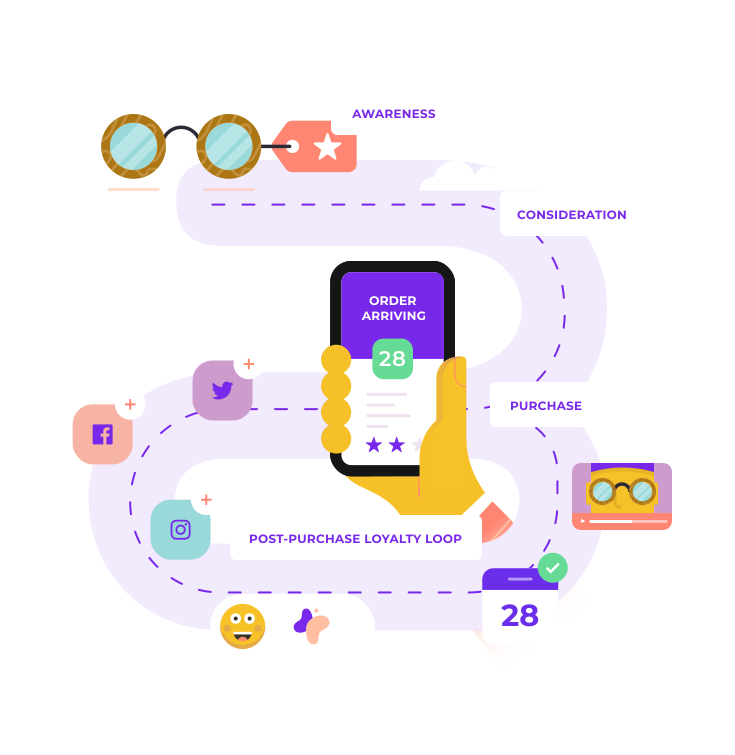
It can be hard to grow a business and one of the ways to increase customer loyalty is to improve their experience. In the world of ecommerce, the customer experience means everything. The ecommerce experience definition is the experience of the customer as they visit the virtual store of the company. The ecommerce experience is the journey the customer goes through when they make a purchase on the website. An ecommerce experience example is the customer's navigation of the company's website and the process of purchasing an item through the website. Other parts of the ecommerce shopping experience include browsing the store, reading the customer reviews, and taking a look at the various options. These all play a role in the ecommerce customer experience.
The online shopping customer experience is important because a good retail experience will keep a customer coming back for future purchases. First, if the customer experience is not positive, he or she might not complete the purchase. There might be some frustration surrounding where to find certain items or he or she might not know how to check out. Next, the customer experience matters because it builds customer loyalty. If the customer has a positive experience on the website from start to finish, he or she will likely come back for the next purchase. Finally, the customer experience of ecommerce technologies matters because it doubles as marketing. A positive experience will translate into recommendations to other individuals that might also visit the virtual store.
What Makes A Good Ecommerce Experience
One of the most important parts of growing a business in the ecommerce world is the customer experience. There are several important parts of what makes a good ecommerce experience. Thinking about these tips when building an ecommerce experience resume will help a business create a positive experience for their customers. Arguably the most important part of “my online shopping experience” is the website. The website is going to provide a structure for the entire customer experience. The buttons need to be laid out in an intuitive manner. The color scheme needs to be inviting and easy on the eyes. The website needs to be easy to navigate and responsive to the needs of the customer. Think about how the website is laid out because this is going to play a major role in the customer experience.
Next, it needs to be easy for the customer to complete their purchase process. When people describe a good experience of online shopping, they are going to discuss the checkout process. The checkout process can sometimes be a major hassle. Think about entering a long credit card number only to figure out the website didn’t respond in a proper manner. This can be incredibly frustrating and the customer may just leave altogether. Make sure the checkout process is easy. Furthermore, guard the customer’s financial data. This is sensitive information and people need to have confidence in the safety and security of the website.
Lastly, when someone is asked to describe your best shopping experience, the customer service is going to make an appearance. People are going to have questions when they start the purchase process. Maybe they can’t find anything. Maybe they have a question about a specific product. Perhaps something has gone wrong. The business needs to have a quick and reliable way to help the customer with his or her problem. The faster and easier the process is, the better the customer experience is going to be. Whether this takes the form of a phone call, an email, or an online chat, this process needs to be smooth. Make sure the customer feels valued. These are only a few of the many facets of the customer experience that matter. Think about creating a positive experience and this will win the loyalty of the customer.
Ecommerce Customer Acquisition
The ecommerce customer experience only matters if there are actually customers to go through it. Therefore, it is important to think about ecommerce customer acquisition as well. This process is important because it helps build up a solid base for a company in the virtual world, helping to grow the business in the process. Therefore, ecommerce customer acquisition is, arguably, the most important factor in the health of a growing company. Therefore, it is important for every business to think about customer acquisition.
The ecommerce customer acquisition model can take many forms. There are multiple customer acquisition channels as well. In the ecommerceworld, there are several customer acquisition process steps. The first step is to make the potential customer a visitor to the website. One of the customer acquisition strategy examples involves digital marketing. Think about social media, emails, electronic ads, and more. Then, once the customer visits the website, the customer becomes a lead, or someone who is interested in the products. During this phase, some of the most important customer acquisition techniques include information on the website. This information will provide information to the customer on products they might be interested in.
Finally, the customer will make a purchase; however, the most challenging part will be making that customer a loyal member. Customer loyalty is the most important part of customer acquisition. In some cases, people might be thinking about paid customer acquisition but developing customer loyalty can take many forms. Sometimes, this can take the form of offering sales or discounts to loyal customers. Customer loyalty is vital.
How To Grow Ecommerce Sales
It is important to think about customer acquisition because making that first customer make that first purchase is important; however, customer retention and repurchasing is just as critical in the world of ecommerce. Some people only focus on that first purchase but there is much more value in keeping that customer coming back for more, making future purchases and even bringing in other people to do the same. Therefore, it is important for people to think about how to grow ecommerce sales. One of the most important parts of how to improve ecommerce sales is the post-purchase experience.
The post-purchase experience involves how the customer interacts with the business after buying an item. How to sell more ecommerce hinges on this post-purchase experience. This might involve asking the customer to review products or soliciting the customer’s recommendations for how to improve ecommerce business. If the customer feels valued by the company, he or she is more likely to return to make a subsequent purchase. This is why the post-purchase experience is a critical part of how to increase revenue in ecommerce. Continue to interact with the customer in a positive way after he or she completes a purchase. This might include offering sales, discounts, or other incentives to get the customer to return. Customer loyalty is vital and the post-purchase experience is an important part of this.
Customer Experience Ecommerce Case Study
There are many people who are looking for a successful model or example to follow. These can be used to generate some inspiration. A customer experience ecommerce case study will help businesses figure out what the most important parts of the customer experience are. A case study on e commerce with questions will even provide a skeleton structure for the reader, walking someone through the process of setting up a successful ecommerce business. People can even find an ecommerce case study for students that might be helpful.
Turning to online business case studies can be helpful for a growing business; however, it is also important to note that this ecommerce case study pdf is anecdotal, meaning they only apply to that specific situation. The way the audience responded in that e commerce case study ppt might not be the way the audience will respond to your business. That same audience might respond differently to your business, leading you down the wrong path unintentionally. Therefore, it is important for everyone to make their ecommerce business unique. Think about your target audience. Then, think about how that target audience might respond to your business model. This is one of the most important parts of building a successful ecommerce business. Use a case study for inspiration; however, it is still important to make your business unique.
E Commerce Examples
There are multiple types of ecommerce examples. The e commerce definition is simply a customer shopping experience that takes place in the virtual world. There are several types of a concept of e commerce including business to business (B2B), business to consumer (B2C), and even business to administration (B2A). All of these types of ecommerce are a little bit different. Therefore, the customer experience is going to be a little bit different as well.
There are multiple benefits of e commerce including that the customer doesn’t have to actually visit a physical store to complete a purchase. This can actually be done in the virtual world, saving people a trip. This saves them time, gas, and stress. This is one of the overall concepts of ecommerce; however, there are multiple examples of ecommerce.
With so many different examples of what is ecommerce business, ranging from purchasing retail to buying entertainment equipment and even shopping for food, there are multiple places that people can turn to become inspired about the world of ecommerce. There is even e commerce Wikipedia that people can turn to; however, it is important to note that this could also lead someone down the wrong path. If the audience responds to your ecommerce introduction differently than the audience in the example, this might actually hurt a business. Therefore, think carefully about your ecommerce model and the experience of your customers on your site. This will play an important role in the current and future success of your business, especially with certain types of e commerce businesses.